LNG storage facilities contain volatile flash vapor (BOG gas). To fully utilize this gas, it can be pressurized to a certain pressure by a compressor and directly supplied to the city's pipeline network, or pressurized to 25 MPa and transported to CNG stations.
BOG recovery compressors are classified into four basic types based on normal operating flow rates: 100 Nm³/h (50~150 Nm³/h), 300 Nm³/h (200~400 Nm³/h), 500 Nm³/h (400~700 Nm³/h), and 1000 Nm³/h (800~1500 Nm³/h).
Low-pressure pipeline compressors use Z-type (vertical), single-stage, air-cooled, oil-free reciprocating piston compressors. Medium-pressure pipeline compressors mostly use V-type or D-type, two- to three-stage, air-cooled, oil-free reciprocating piston compressors.
The high-pressure CNG refueling compressor uses a V-type, W-type, or D-type, four-stage compression compressor (discharge pressure 20.0~25.0MPa), a fully air-cooled, micro-oil reciprocating piston compressor.
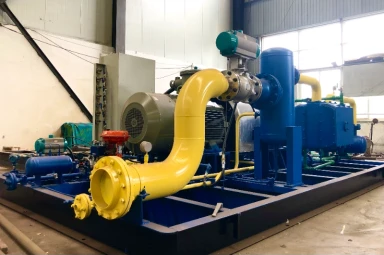
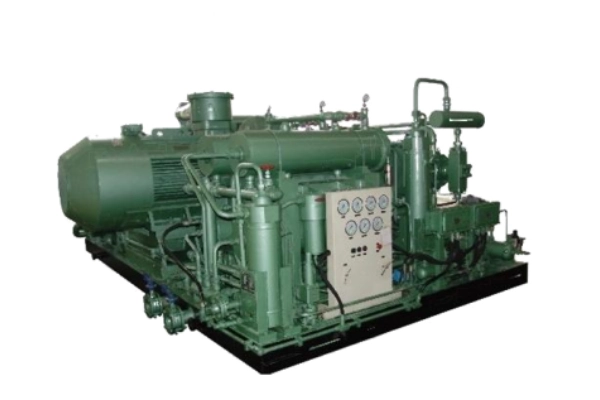
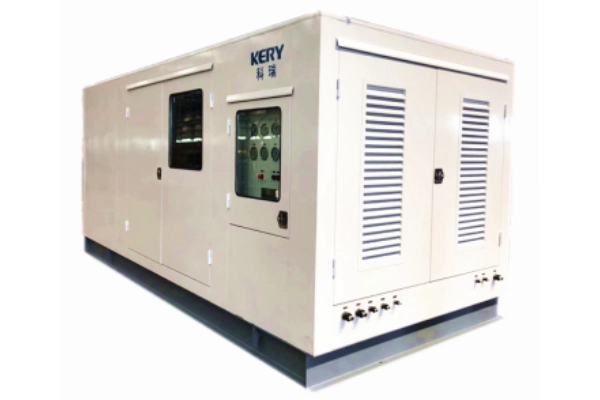
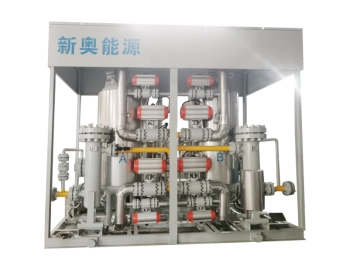
The standard configuration of the compressor skid includes a soundproof protective enclosure, compressor main unit, pre-mounted separator buffer, interstage separator, explosion-proof motor, transmission components, common base, gas circuit system, cooling system, sewage system, operating instrument system, and PLC electrical control system, all integrated on the skid.The compressor’s process ports connect to the outside of the base and are equipped with relevant flanges/connectors. Both the base and the enclosure are equipped with lifting devices for easy on-site installation.

-25BOG-compressor.webp)