Lubricated vs. Oil-Free Natural Gas Compressors: Which Wins?
Release time: 2026-04-24
Selecting the ideal compression technology remains a high-stakes decision for modern energy infrastructure developers. For engineering leads managing deep wellhead extraction, complex chemical synthesis, or high-volume city gas distribution networks, the choice often narrows down to internal lubrication mechanics. This operational dilemma fundamentally alters midstream and downstream efficiency.
The ongoing debate between oil-lubricated and entirely oil-free systems heavily impacts final gas purity metrics and long-term facility overhead expenses. Understanding these structural variations is vital to preventing unexpected production downtime, avoiding catastrophic equipment failures, and ensuring absolute regulatory compliance in modern industrial sectors.

Downstream Purity and the Imperative Risk of Carbon Carryover
In highly sensitive applications such as compressed natural gas (CNG) vehicle fueling infrastructure and precise chemical processing plants, media contamination represents a catastrophic failure point. Traditional oil-lubricated reciprocating units rely on a continuous film of oil within the cylinders to minimize mechanical friction. However, this layout inherently introduces micro-aerosols and vaporized hydrocarbon molecules directly into the flowing discharge stream, which leads to cumulative system degradation.
Upgrading to an advanced oil-free gas compressor completely removes the systemic risk of hydrocarbon carryover from the system engineering equation. This structural absolute preserves the delicate catalyst lifespans inside industrial chemical reactors, prevents the costly fouling of localized distribution pipelines, and ensures that CNG filling infrastructure meets the rigorous fuel-quality standards required by modern high-pressure vehicle fuel systems. For processes prioritizing absolute process safety, uncompromised purity is an operational baseline.
Evaluating Real Lifecycle Expenses: Maintenance Packages and Downtime Avoidance
While traditional lubricated compressor configurations often attract procurement teams due to lower initial capital expenditure, their long-term operational ledgers reveal a completely different financial reality. The maintenance footprint of an oil-infused unit is continuous and complex, requiring aggressive schedules for separator element replacements, frequent oil filter turnarounds, and heavy regulatory compliance tracking for contaminated condensate fluid disposal.
Investing in a highly engineered, robust natural gas compressor utilizing specialized self-lubricating composite materials dramatically lowers routine maintenance intervals. By entirely eliminating complex oil-separation arrays, active filtration systems, and oil level tracking, plant operators enjoy vastly increased facility uptime. Over a standard ten-year operating cycle, the reduction in specialized labor hours, physical replacement parts, and planned production stoppages easily offsets the initial asset investment, lowering the total cost of ownership.
Modular Systems Engineering via Custom Skid-Mounted Architectures
Modern industrial project execution timelines demand rapid field deployment, robust structural resilience, and modular scalability across variable environments. Traditional stationary field installations frequently suffer from costly logistical delays stemming from complex on-site piping alignment, localized electrical wiring integration, and specialized structural foundation pouring.
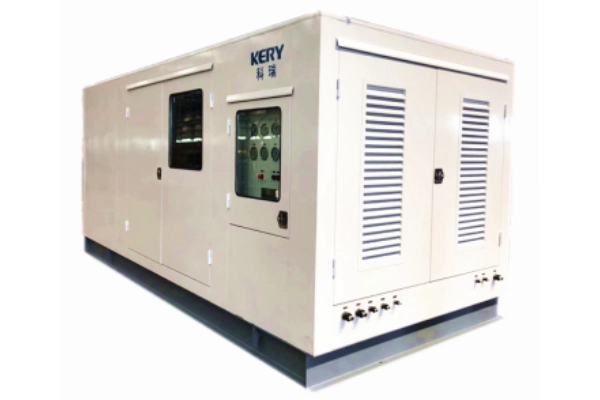
A precision-engineered skid-mounted natural gas compressor elegantly mitigates these field liabilities by integrating the primary power unit, cooling systems, multi-stage filtration, and automated PLC control systems onto a single structural steel base frame. This modular approach transforms site installation from weeks of manual field construction into a streamlined plug-and-play process. Furthermore, when coupled with high-performance soundproof enclosures, these systems function reliably close to administrative zones or urban distribution hubs without violating strict municipal noise regulations.
Technical Engineering Matrix: Structural Comparison
| Engineering Metric | Standard Lubricated Systems | Advanced KERY Oil-Free Systems |
| Discharge Gas Purity | Trace oil carryover present | 100% Certified Oil-Free |
| Routine Maintenance Cycle | Frequent (Filter/oil changes) | Extended (Mechanical seals focus) |
| Environmental Impact | High (Hazardous waste disposal) | Eco-friendly (Zero oil waste) |
| Operational Uptime | Moderate (Interrupted by service) | Maximum (Continuous operation) |
Frequently Asked Questions
Q: What is the primary operational advantage of using an oil-free natural gas compressor?
The primary advantage is the total elimination of hydrocarbon contamination in the discharge gas stream. This ensures 100% gas purity, protects downstream catalysts, eliminates the need for expensive multi-stage filtration systems, and minimizes environmental disposal liabilities.
Q: How do skid-mounted compressor systems accelerate industrial project timelines?
Skid-mounted systems integrate the compressor, motor, cooling setup, and PLC control panels onto a single pre-tested structural frame. This layout eliminates extensive on-site mechanical assembly, piping alignment, and specialized foundation construction, reducing commissioning time from weeks to days.
Q: Can KERY oil-free compressors maintain efficiency under low inlet pressures?
Yes. KERY engineering structures multi-stage compression configurations capable of handling extremely low inlet pressures (down to 0.0005 MPaG). This specialized design ensures high volumetric efficiency and stable discharge pressures across highly volatile flow rates.