Where to Apply High-Pressure (40 MPa) Nitrogen Compressors?
Release time: 2026-06-11
In modern industrial applications, nitrogen is much more than just an inert gas; it is a critical safety and operational tool. When compressed to extreme pressures, its utility scales exponentially, transforming from a simple blanketing agent into a high-energy driving force capable of managing volatile environments.
For engineering managers and procurement leads, selecting the right equipment is a high-stakes decision. Operating at pressures as high as 40 MPa requires specialized engineering that guarantees absolute reliability, thermal efficiency, and zero leakage under continuous load.
This guide explores the exact high-demand industrial sectors where these heavy-duty systems are indispensable, helping you determine how to optimize your on-site gas compression infrastructure.

Upstream Oil and Gas: Underbalanced Drilling and Well Stimulation
The upstream oil and gas sector is perhaps the most demanding environment for a High-Pressure Nitrogen Compressor. During underbalanced drilling (UBD) processes, maintaining the wellbore pressure below the reservoir pore pressure is critical to prevent formation damage and eliminate the risk of lost circulation.
Gas Injection and Density Reduction: Nitrogen is injected into the drilling fluid to lower its effective density. At 35 to 40 MPa, the compressed gas can overcome intense downhole hydrostatic pressures, allowing the drilling team to maintain precise control over the well profile.
Enhanced Oil Recovery (EOR): In mature reservoirs, injecting high-pressure nitrogen helps maintain reservoir pressure and miscible displacement, forcing trapped hydrocarbons toward production wells. This requires continuous, high-volume displacement that only heavy-duty multi-stage reciprocating compressors can deliver.
Midstream Pipeline Integrity: High-Volume Purging and Pressure Testing
Before a natural gas or petroleum pipeline can be commissioned, or during routine maintenance turnarounds, the entire system must be completely evacuated of hydrocarbons and moisture. This is where a robust 40 MPa Nitrogen Compressor proves its worth in midstream logistics.
Pipeline Purging and Inerting: To prevent explosive mixtures of air and residual gas, high-purity nitrogen is used to displace hydrocarbons. The high pressure allows the gas to travel hundreds of miles through large-diameter pipelines efficiently, ensuring a thorough purge.
Pneumatic Strength and Leak Testing: While hydrostatic testing is common, certain pipelines—especially those in sub-zero climates or chemical-sensitive environments—cannot tolerate water. High-pressure nitrogen serves as a dry, safe, and non-corrosive medium for pneumatic proof testing at elevated operating limits.
Downstream Petrochemical Refining: Reactor Blanketing and Catalyst Regeneration
Inside modern refineries and chemical plants, high temperatures and highly volatile compounds are a volatile mix. Managing these hazards requires sophisticated blanketing and purging systems.
High-Pressure Reactor Blanketing: Many chemical syntheses take place in reactors operating at elevated pressures. A continuous supply of high-pressure nitrogen ensures that the headspace remains completely inert, preventing oxidation and secondary chemical explosions.
Catalyst Regeneration: Over time, catalysts in hydrocrackers and reformers become fouled with coke. Regenerating these catalysts involves burning off the carbon under strictly controlled, low-oxygen environments. High-pressure nitrogen is mixed with precise amounts of air to regulate the combustion temperature, protecting multi-million dollar catalyst beds from thermal degradation.
Technical Comparison of High-Pressure Nitrogen Applications
To better understand how equipment configurations adapt to these distinct operational demands, consider the following technical breakdown:
| Industrial Application | Operating Pressure Range | Purity Requirement | Primary Equipment Demands |
| Underbalanced Drilling (UBD) | 15 – 35 MPa | 95% – 98% | High mobility, diesel power, continuous flow |
| Pipeline Purging & Inerting | 10 – 40 MPa | 95% – 99% | Rapid deployment, skid-mounted design, variable flow |
| Refinery Reactor Blanketing | 0.7 – 35 MPa | 99% – 99.9% | Continuous duty, electric drive, extreme reliability |
| Catalyst Regeneration | 15 – 30 MPa | 98% – 99.5% | Precise flow regulation, multi-stage cooling |
The Critical Role of Mobility: Skid-Mounted Systems for Field Operations
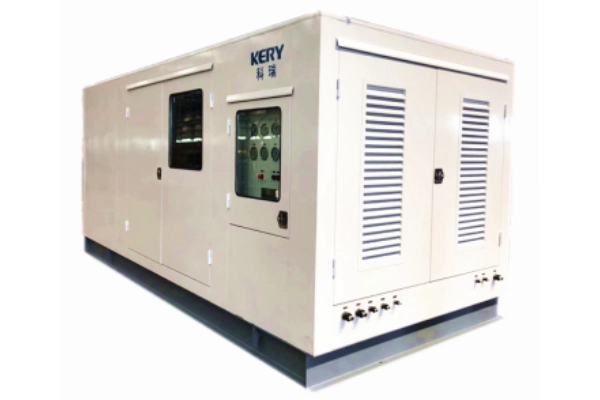
In field environments like remote oilfields or cross-country pipelines, stationary equipment is a liability. This operational pain point has driven the industry toward a Skid-Mounted Nitrogen Compressor design.
By integrating a low-pressure air compressor, a filtration/separation membrane module, and a high-pressure booster onto structural steel skids, operators achieve true plug-and-play capability. These systems are typically diesel-powered and air-cooled, enclosed in rugged metal canopies that allow them to be mounted directly onto truck chassis or oilfield trailers. This setup eliminates complex field assembly and ensures the system can withstand harsh weather, from desert heat to arctic cold.
Engineering Excellence with Kerygas
Deploying high-pressure gas systems requires an equipment partner that understands the nuances of multi-stage compression and gas separation. Kerygas has established itself as an industry leader by engineering complete, turn-key nitrogen generation and compression packages.
By seamlessly combining low-pressure screw technology with proprietary membrane and adsorption (PSA) separation modules and robust high-pressure boosters, Kerygas delivers systems that achieve up to 40 MPa discharge pressure and flow rates from 50 to 2000 Nm³/h. Whether your operation requires a diesel-driven mobile unit for oilfield services or a high-purity stationary system for a chemical facility, Kerygas provides the rugged reliability and technical precision required to keep your operations safe and efficient.
Frequently Asked Questions (FAQ)
Q: What is the advantage of using a 40 MPa nitrogen compressor over liquid nitrogen delivery for remote sites?
On-site nitrogen generation using a high-pressure compressor eliminates the logistical headaches, high transport costs, and boil-off losses associated with liquid nitrogen (LN2) trailers. For remote oilfields or pipelines, it provides an uninterrupted, self-sustaining supply of gas using only ambient air and fuel.
Q: How does a multi-stage booster manage the extreme heat generated during 40 MPa compression?
Compression at these high ratios generates significant thermal energy. Premium systems utilize multi-stage compression with highly efficient intercoolers (air-cooled or water-cooled) between each stage. This lowers the gas temperature before it enters the next cylinder, protecting seals, maintaining lubrication integrity, and improving overall volumetric efficiency.
Q: Can a single skid-mounted nitrogen system switch between membrane and PSA technology?
Typically, a system is designed around one specific technology based on the application. Membrane systems are lighter and highly suited for mobile oilfield applications requiring up to 98% purity. PSA (Pressure Swing Adsorption) systems are better suited for stationary industrial plants requiring ultra-high purity up to 99.9%. Kerygas customizes the skid configuration to match your exact purity and mobility requirements.